Model Guide
Suzuki Carry: U.S. Buyer's Guide
Carry, produced 1961–present. A verified, generation-by-generation guide to the Suzuki Carry — engines, drivetrains, U.S. import eligibility, and what to check before you buy.
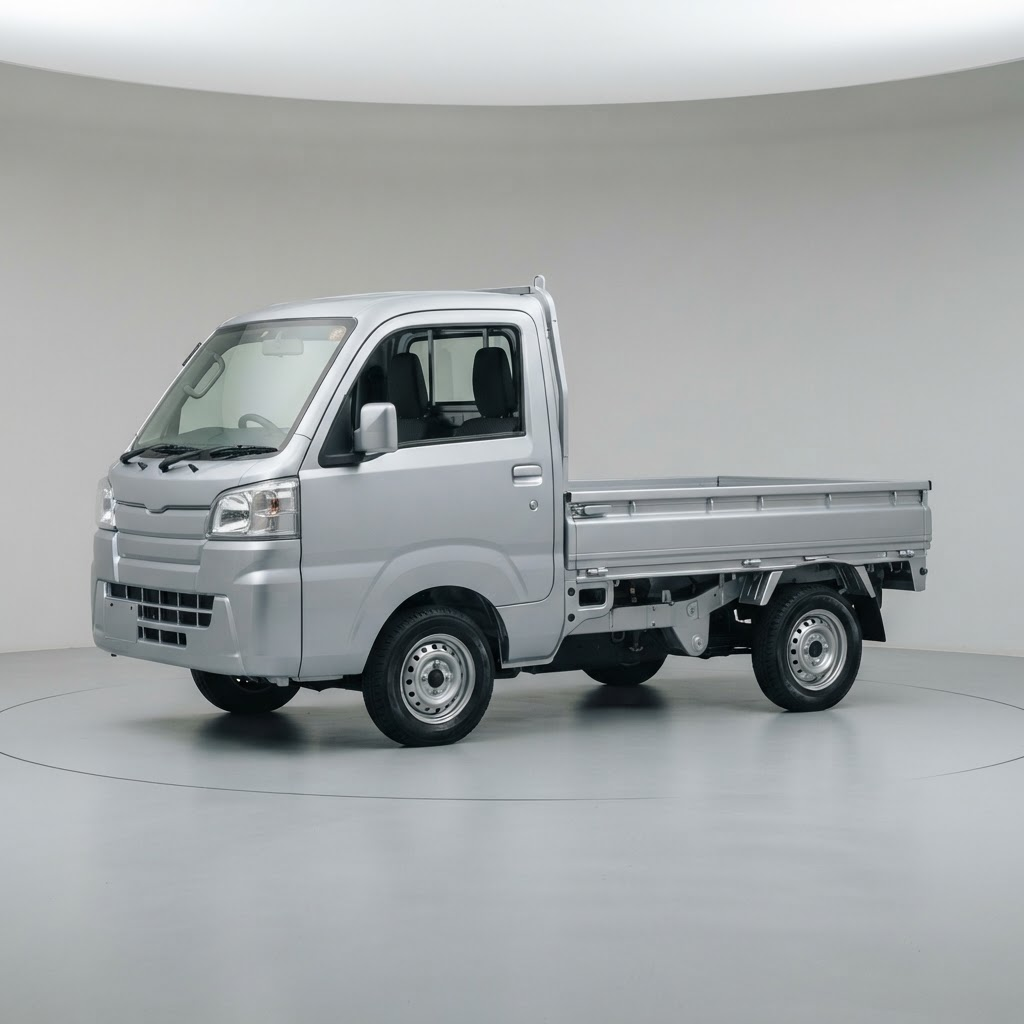
The Suzuki Carry (Carry) is a kei truck produced 1961–present. Suzuki Digital Library provides factory historical specs for 1990 and 1999 representative grades.
What sets it apart: Large historical production footprint; excellent factory historical documentation.
Documented engine history: 1990: F6A 657cc inline-3; 1999 10th gen: F6A 657cc, NA/turbo variants. Representative chassis and generations include DB51T/DA51T (1990 era); DA52T/DB52T (1999 10th gen). Because Suzuki Carry spanned multiple generations and trims, KeiScout verifies the exact chassis, engine, and transmission on each specific vehicle rather than assuming one spec applies across the whole line.
Why U.S. buyers consider it: commonly a fit for b2b utility, farms, landscaping, individuals.
Quick answer
What is the Suzuki Carry, and is it worth buying?
Quick facts
Last verified: August 15, 2026- Manufacturer
- Suzuki
- Model
- Carry
- Production
- 1961–present
- Vehicle type
- Kei truck
- Engine notes
- 1990: F6A 657cc inline-3; 1999 10th gen: F6A 657cc, NA/turbo variants
- Drivetrain
- 2WD; part-time 4WD available
- Transmission
- 1999 examples: 5MT; 3AT on selected variants
- Key chassis / generations
- DB51T/DA51T (1990 era); DA52T/DB52T (1999 10th gen)
- U.S. import eligibility
- Use manufacture date, not model year, for U.S. 25-year eligibility
Confidence: HIGH. Specifications are intentionally qualified where trims and chassis differ.
Who should consider the Suzuki Carry?
Best for: B2B utility, farms, landscaping, individuals.
This reflects the verified best-fit use cases in our dataset, not a performance rating. Confirm the specific vehicle's configuration and your state's rules before buying.
What is the Suzuki Carry?
Suzuki Carry is a kei truck in the Kei class — Japan's smallest highway-legal vehicle category, capped by law on length, width, and engine displacement (660cc in the modern era). Within those limits, Suzuki built Suzuki Carry for practical hauling and work use. Suzuki Digital Library provides factory historical specs for 1990 and 1999 representative grades.
Suzuki Carry generations
| Generation / era | Years | Representative chassis | Engine | Drive | Transmission | Confidence |
|---|---|---|---|---|---|---|
| 1990 new-standard Carry | 1990–1991 era | M-DB51T / M-DA51T representative | F6A 657cc 3-cyl | 2WD / 4WD depending code | 4MT/5MT depending representative grade | High |
| 10th generation | 1999–2002 initial era | GD-DA52T / GD-DB52T | F6A 657cc NA/turbo representative | 2WD / part-time 4WD | 5MT; selected 3AT | High |
1990 new-standard Carry
1990–1991 era- Chassis
- M-DB51T / M-DA51T representative
- Engine
- F6A 657cc 3-cyl
- Drive
- 2WD / 4WD depending code
- Transmission
- 4MT/5MT depending representative grade
Suzuki lists 3,275 mm length, 1,395 mm width, 1,840 mm wheelbase for representative 1990 grades
Confidence: High
10th generation
1999–2002 initial era- Chassis
- GD-DA52T / GD-DB52T
- Engine
- F6A 657cc NA/turbo representative
- Drive
- 2WD / part-time 4WD
- Transmission
- 5MT; selected 3AT
Suzuki lists 3,395 mm length, 1,475 mm width, 2,350 mm wheelbase; representative outputs 42–56 PS
Confidence: High
- 1990 new-standard Carry: Suzuki lists 3,275 mm length, 1,395 mm width, 1,840 mm wheelbase for representative 1990 grades. Source
- 10th generation: Suzuki lists 3,395 mm length, 1,475 mm width, 2,350 mm wheelbase; representative outputs 42–56 PS. Source
Representative specification — actual specifications vary by chassis and trim. Where a row reads "verify chassis," treat the figures as generation-level context, not a universal trim-level claim.
Suzuki Carry engine
Engines and transmissions changed across Suzuki Carry generations, so there is no single universal spec. Verified history: 1990: F6A 657cc inline-3; 1999 10th gen: F6A 657cc, NA/turbo variants.
- 1990 new-standard Carry
- F6A 657cc 3-cyl · 4MT/5MT depending representative grade
- 10th generation
- F6A 657cc NA/turbo representative · 5MT; selected 3AT
How fast is a Suzuki Carry?
Short answer: there is no single top speed for the Suzuki Carry. KeiScout does not publish one universal figure because it is not something the verified dataset records at the trim level, and real-world top speed varies meaningfully from one truck to the next. As a Kei-class vehicle, the Suzuki Carry is built for practical low-speed hauling and utility work rather than sustained high-speed cruising.
What actually determines a given Suzuki Carry's top speed:
- Generation and engine (660cc-class three- and four-cylinder engines differ)
- Transmission and final gearing
- 2WD vs 4WD drivetrain
- Overall condition, tuning, and maintenance
- Tire size and inflation
- Load, terrain, and headwind
Mechanical capability is not the same as legal road use. Even where a Suzuki Carry can physically reach higher speeds, many U.S. states restrict Kei trucks from interstates and limited-access highways regardless of the truck's capability. Treat local/rural roads, property use, and highway use as separate questions.
For a specific vehicle — including questions like a particular 1997 Suzuki Carry's top speed — the honest answer depends on that truck's exact chassis, engine, gearing, and condition. We verify the drivetrain on each candidate rather than quoting a generic number.
Suzuki Carry reliability
Reliability on any imported Suzuki Carry is driven by age and upkeep, not reputation. Many chassis/engine changes; use chassis-specific lookup. Focus your inspection on the areas below.
Mechanical simplicity
These are mechanically straightforward trucks, but every example is now decades old — condition and history matter far more than the badge.
Rust
The most consequential age issue. Inspect the frame, bed floor, cab corners, and rockers thoroughly.
Cooling system
Radiator, hoses, and water pump deserve close attention on aging engines.
Seals & hoses
Rubber components harden with age; look for weeping oil, coolant, and hydraulic leaks.
Drivetrain & suspension
Check for play, noise, and worn bushings; on 4WD trucks, confirm the system fully engages and disengages.
Brakes
Confirm condition and that replacement parts are available in Kei sizes.
Timing-related maintenance
Where applicable, confirm timing components have been serviced on schedule for the specific engine.
Pre-purchase inspection
An inspection before purchase is the single best predictor of ownership experience on any imported Kei truck.
Suzuki Carry 4WD
Documented drivetrain availability: 2WD; part-time 4WD available. DB/DB52 4WD variants.
- 1990 new-standard Carry (1990–1991 era) — 2WD / 4WD depending code. F6A 657cc 3-cyl.
- 10th generation (1999–2002 initial era) — 2WD / part-time 4WD. F6A 657cc NA/turbo representative.
4WD hardware and low-range availability differ by generation, chassis code, and trim. Confirm the specific vehicle's drivetrain before purchase — we verify this on every candidate.
Common Suzuki Carry configurations
Kei trucks were offered in several body configurations, but not every configuration existed for every model, generation, or market. Treat the list below as the range to look for — we confirm what was actually available for a given Suzuki Carry chassis during your search.
Standard flatbed
The most common layout — an open cargo bed for general hauling.
Dump / tipper
A hydraulically tilting bed for loose material; availability varies by generation and trim.
Van / panel
Enclosed variants exist within several Kei families for covered cargo and equipment.
Specialty / work
Refrigerated, lift, and agricultural bodies were built for specific markets and eras.
Suzuki Carry parts availability in the U.S.
Verified parts picture for the Suzuki Carry: strong due to carry/every ecosystem. In practice, routine maintenance parts are the easiest to source, while model- and generation-specific components are more often ordered from Japan or through specialist suppliers — sometimes with a wait. Always order against the exact chassis/model code rather than the model name alone.
Suzuki Carry parts vs Honda Acty and Daihatsu Hijet
| Model | Verified parts ecosystem |
|---|---|
| Suzuki Carry(this guide) | Strong due to Carry/Every ecosystem |
| Honda Acty | Good enthusiast ecosystem |
| Daihatsu Hijet | Strong commercial ecosystem |
These are verified ecosystem descriptions, not a ranking. Parts availability for any individual truck depends on its generation, chassis, and configuration.
Suzuki Carry vs Suzuki Carry vs Daihatsu Hijet
| Suzuki Carry | Honda Acty | Daihatsu Hijet | |
|---|---|---|---|
| Drivetrain | 2WD; part-time 4WD available | 2WD and 4WD depending on chassis/trim | FR/2WD and part-time 4WD depending on trim |
| Transmission | 1999 examples: 5MT; 3AT on selected variants | Manual; automatic availability varies by generation/trim | Manual and automatic depending on generation/trim |
| 4WD availability | DB/DB52 4WD variants | HA4 4WD; later HA7 4WD | Part-time 4WD variants |
| Parts ecosystem | Strong due to Carry/Every ecosystem | Good enthusiast ecosystem | Strong commercial ecosystem |
| Typical buyer / use | B2B utility, farms, landscaping, individuals | Individual buyers, collectors, light utility | Farms, landscaping, property/facility use |
Verified specification fields only — blank cells (—) mean the dataset does not record a verified value for that model, not that the feature is unavailable.
Is a Suzuki Carry good for work?
Based on our verified dataset, the Suzuki Carry is commonly a fit for b2b utility, farms, landscaping, individuals. Within Kei limits, it can be a practical, low-running-cost work vehicle for tight sites and short hauls.
Common work uses
- Landscaping and grounds crews
- Farms, nurseries, and agriculture
- Property and facility maintenance
- Campuses, resorts, and golf courses
- Warehouses and light in-plant hauling
- Private-property and light utility work
Know the limits
- 660cc-class engines and Kei payload limits suit light loads, not heavy-duty hauling.
- Highway/interstate use is restricted in many states regardless of capability.
- Cargo bed and cab size are compact by design — match the configuration to the job.
How much does it cost to import a Suzuki Carry from Japan?
There is no single universal price to import a Suzuki Carry. The auction or purchase price in Japan is only one line in the total landed cost — the all-in amount to get the truck from Japan to your driveway. The major components are:
Duty/tariff treatment depends on the vehicle's classification under the U.S. Harmonized Tariff Schedule and is not a flat rate for every vehicle. Freight, auction, inland, broker, and port charges are variable market costs — treat them as estimates and inputs, not fixed figures.
Is the Suzuki Carry legal in the United States?
Federal import eligibility is based on a vehicle's manufacture date, not simply its model year. Under the NHTSA 25-year rule, a vehicle is generally exempt from FMVSS import requirements once it is at least 25 years old — so as of this year, Suzuki Carry examples manufactured in 2001 or earlier may qualify, subject to EPA/DOT and other requirements. A truck built late in a model year can cross the threshold months after an otherwise-identical early example.
Use manufacture date, not model year, for U.S. 25-year eligibility.
Can I register a Suzuki Carry in my state?
Federal import eligibility does not guarantee you can title, register, or drive a Suzuki Carry on public roads. That decision is made state by state, and the rules vary widely — from full road use to case-by-case titling to outright restrictions.
Suzuki Carry buyer checklist
Model year & manufacture date
Check the build plate — the actual manufacture date (not the model year) drives federal 25-year import eligibility.
Chassis number
Confirm the chassis code matches the generation, engine, and drivetrain you expect.
Engine
Confirm the documented engine for the chassis; listen for smoke, noise, and cooling behavior at temperature.
Transmission (2WD/4WD)
Check clutch feel on manuals and shift quality on automatics; on 4WD trucks, engage and disengage the system and any low range.
Rust & corrosion
Inspect the frame, bed floor, cab corners, and rockers for rust and past repairs.
Maintenance history
Look for service records, timing-related maintenance history, and fluid condition.
Mileage
Read mileage in context of age, service history, and how the truck was used, not in isolation.
Cooling system
Inspect the radiator, hoses, and water pump — cooling neglect is a common issue on aging Kei trucks.
Bed & body
Assess the bed, tailgate, and any specialty (dump/lift/refrigerated) body for damage and function.
Tires & brakes
Kei-size tires and brake parts vary — check wear and confirm replacement availability.
Parts availability
Confirm routine and model-specific parts can be sourced before you commit, using the chassis/model code.
State registration rules
Verify your state's titling and road-use rules before buying — federal import eligibility is separate.
Expected landed cost
Estimate the all-in landed cost (vehicle, shipping, duty, port, domestic transport, state costs), not just the purchase price.
Intended use
Match the specific configuration and drivetrain to how you'll actually use the truck.
Documentation
Ensure export paperwork and import documents are complete and consistent.
Suzuki Carry for sale
Looking for a Suzuki Carry for sale?
KeiScout doesn't run a listings marketplace — so you won't find inflated inventory here. Instead, we search appropriate U.S. and Japanese sources for a Suzuki Carry matching your year range, drivetrain, configuration, budget, and intended use, and we verify import and title eligibility before you commit.
Looking for a Suzuki Carry?
Tell KeiScout the year range, drivetrain, configuration, budget, and intended use you're after. We'll search appropriate U.S. and Japanese sources for matching vehicles.
Need multiple Suzuki Carry trucks?
We source Kei trucks at fleet scale with matched, standardized configurations and one coordinated import process.
Keep researching smarter
Get weekly model notes, price context, and buyer-useful Kei truck finds in your inbox.
Free to join. Unsubscribe anytime.
Related questions
Are Suzuki Carry trucks legal in the U.S.?
How fast does a Suzuki Carry go?
What engine does a Suzuki Carry have?
Can a Suzuki Carry drive on the highway?
Are Suzuki Carry parts available in the U.S.?
Is the Suzuki Carry reliable?
Is the Suzuki Carry 4WD?
How much does a Suzuki Carry cost to import?
Is a Suzuki Carry good for work like landscaping or farms?
Suzuki Carry vs Honda Acty: which should I buy?
Suzuki Carry vs Daihatsu Hijet: which should I buy?
What should I inspect before buying a Suzuki Carry?
Suzuki Carry comparisons
Related KeiScout research
Sources
Manufacturer sources
- Suzuki Digital Library — Factory historical specifications for 1990 and 1999 Carry.
Government source
- NHTSA — 25-year exemption runs from vehicle manufacture date.
KeiScout is a sourcing and research service. Vehicle availability, condition, pricing, import eligibility, title eligibility, and registration requirements vary by vehicle and jurisdiction. Verify vehicle-specific information before purchase. Last verified: August 15, 2026.
Keep researching
Last verified: August 15, 2026. Specifications reflect the verified dataset and are qualified where trims and chassis differ.